
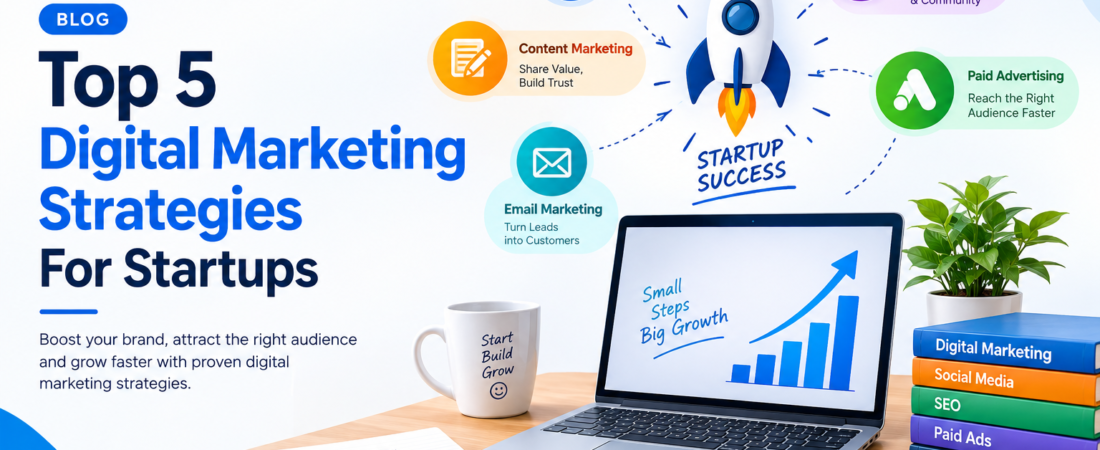
In today’s competitive business environment, having a strong digital presence is no longer optional for enterprises. Customers, business partners, and decision-makers increasingly use search engines, social media, websites, email, and other digital channels to discover and evaluate businesses. This makes digital marketing for enterprises an important part of a modern growth strategy.
Unlike traditional marketing, digital marketing allows enterprises to reach specific audiences, track campaign performance, generate qualified leads, and continuously optimize their marketing efforts. From SEO and content marketing to Google Ads, Meta Ads, LinkedIn Ads, email marketing, and social media management, enterprises can use multiple channels to build a powerful online presence.
In this blog, we will explore the 5 major benefits of digital marketing for enterprises and understand why businesses of different sizes and industries are investing in digital marketing.
What Is Digital Marketing for Enterprises?
Digital marketing for enterprises refers to the use of online channels and digital technologies to promote products, services, and brands to a targeted audience.
Enterprise marketing typically involves larger audiences, multiple products or services, several locations, and complex customer journeys. Therefore, enterprise digital marketing requires a strategic approach that connects different marketing channels and business objectives.
Common enterprise digital marketing activities include:
Search Engine Optimization (SEO)
Google Ads and Pay-Per-Click advertising
Meta Ads
LinkedIn Ads
Social media marketing
Content marketing
Email marketing
Online reputation management
Website development and optimization
Conversion rate optimization
Analytics and performance tracking
When these channels work together, enterprises can create a consistent digital customer journey and generate measurable business results.
1. Reach a Larger and More Targeted Audience
One of the biggest benefits of digital marketing for enterprises is the ability to reach a large audience while maintaining precise targeting.
Traditional marketing methods such as newspapers, billboards, television, and print advertisements can reach many people, but targeting specific customer segments can be difficult. Digital marketing provides enterprises with more control over who sees their campaigns.
For example, an enterprise can target audiences based on factors such as:
Location
Age group
Industry
Job role
Interests
Online behavior
Search intent
Previous website interactions
Platforms such as Google Ads and LinkedIn Ads can be particularly useful for B2B enterprises because campaigns can be designed around specific search queries, industries, professional roles, and business audiences.
Similarly, social media advertising can help enterprises reach potential customers across different locations and demographic groups.
For businesses operating in multiple cities, states, or countries, digital marketing can also support location-specific campaigns. This makes it easier to create customized marketing strategies for different markets.
2. Generate High-Quality Leads and Business Opportunities
Generating leads is a major objective for many enterprises, and digital marketing can provide multiple opportunities to attract potential customers.
A professionally designed website can act as the central point of an enterprise’s digital marketing strategy. Visitors can learn about products and services, view case studies, submit inquiry forms, request quotations, contact sales teams, or communicate through WhatsApp and other channels.
Different digital channels can bring users to the website at different stages of the buying journey.
For example:
SEO can attract people actively searching for solutions.
Google Ads can target users with high purchase or inquiry intent.
LinkedIn Ads can help B2B businesses reach professional audiences.
Meta Ads can help enterprises generate awareness, engagement, and leads.
Email marketing can nurture existing prospects and customers.
This multi-channel approach allows enterprises to build a broader lead-generation system instead of depending on a single marketing source.
Digital marketing also makes it possible to create landing pages and lead-generation campaigns for specific products, services, locations, or customer segments.
As a result, enterprises can build campaigns around measurable objectives such as website inquiries, calls, form submissions, registrations, product demonstrations, or quotation requests.
3. Build a Strong and Recognizable Brand
Enterprise customers often compare multiple companies before making a purchasing decision. A strong online presence can help businesses communicate their expertise, values, products, services, and competitive advantages.
Digital marketing provides enterprises with multiple platforms to build and maintain brand visibility.
A consistent digital branding strategy can include:
Professional website design
Search engine visibility
Social media content
Educational blogs
Industry-related articles
Customer testimonials
Case studies
Video content
Email newsletters
Online advertising
For example, regularly publishing useful content can position a company as a knowledgeable resource within its industry.
An enterprise website should also clearly communicate its value proposition and provide easy access to important information. Professional design, fast performance, mobile responsiveness, clear navigation, and useful content can contribute to a better user experience.
Social media can further support brand communication by allowing enterprises to share company updates, industry insights, product information, achievements, and educational content.
Over time, consistent digital marketing can help create stronger brand recognition across relevant online channels.
4. Measure Marketing Performance and ROI
Another important advantage of digital marketing is measurability.
With traditional marketing, it can sometimes be difficult to determine exactly how many customers interacted with an advertisement or what caused them to take action. Digital marketing provides enterprises with access to detailed performance data.
Depending on the campaign, businesses can monitor metrics such as:
Website traffic
Leads generated
Cost per lead
Conversion rate
Click-through rate
Search rankings
Ad impressions
Engagement
Website conversions
Customer acquisition cost
Return on advertising spend
This data allows marketing teams to understand what is working and where improvements may be required.
For example, if a Google Ads campaign generates many clicks but very few inquiries, the enterprise can review its keywords, advertisements, landing page, targeting, and conversion process.
Similarly, SEO performance can be monitored through organic traffic, keyword rankings, search impressions, and conversions.
This data-driven approach allows enterprises to make marketing decisions based on measurable performance rather than relying only on assumptions.
5. Support Long-Term Business Growth and Scalability
Digital marketing can support enterprise growth by creating marketing systems that can be expanded as the business grows.
An enterprise may start with a specific product, service, or geographic market and gradually expand into new locations or customer segments. Digital marketing campaigns can be adapted to support these changes.
For example, an enterprise expanding into a new city can develop location-specific landing pages and SEO campaigns. Paid advertising campaigns can also be customized according to the new market.
Similarly, businesses launching a new product can combine:
SEO content
Google Ads
Social media campaigns
Email marketing
Landing pages
Remarketing
Video marketing
This creates multiple touchpoints between the brand and its target audience.
Automation can further improve scalability. Enterprises can use marketing automation tools for activities such as email campaigns, lead nurturing, customer communication, reporting, and audience segmentation.
The result is a more structured marketing ecosystem that can support business expansion without relying entirely on manual marketing activities.
How Enterprises Can Create an Effective Digital Marketing Strategy
The success of digital marketing depends on having a clear strategy rather than simply using multiple online platforms.
Enterprises should begin by identifying their business objectives and target audience.
A basic digital marketing strategy can include the following steps:
1. Define Business Goals
Determine whether the primary objective is brand awareness, lead generation, sales, customer retention, website traffic, or market expansion.
2. Identify the Target Audience
Understand the customer’s industry, requirements, challenges, location, interests, and purchasing behavior.
3. Optimize the Website
The website should be fast, mobile-friendly, secure, easy to navigate, and optimized for search engines and conversions.
4. Develop an SEO Strategy
Create useful content around relevant search terms and optimize important website pages for search engines.
5. Use Paid Advertising
Google Ads, Meta Ads, and LinkedIn Ads can complement organic marketing and help enterprises reach targeted audiences faster.
6. Create Valuable Content
Blogs, case studies, videos, guides, and social media content can help educate audiences and strengthen brand credibility.
7. Track and Optimize Results
Regularly analyze campaign data and make improvements based on performance.
Why Professional Digital Marketing Services Matter
Enterprise digital marketing can become complex because businesses often manage multiple products, locations, audiences, platforms, and campaigns.
Working with a professional digital marketing team can help enterprises develop an integrated strategy covering website development, SEO, paid advertising, social media, content, and performance tracking.
At SG Web Technologies, we provide digital marketing and website development solutions designed to help businesses establish and grow their online presence.
Our services include:
Website Development
SEO
Meta Ads
Google Ads
LinkedIn Ads
Social Media Management
Performance Marketing
Digital Marketing Strategy
Our approach focuses on combining professional websites with targeted digital marketing campaigns to create a complete online growth ecosystem.
Conclusion
The importance of digital marketing for enterprises continues to grow as customers increasingly use digital channels to discover, research, and connect with businesses.
The five key benefits include reaching targeted audiences, generating quality leads, building brand visibility, measuring marketing performance, and supporting scalable business growth.
However, successful digital marketing requires more than simply running advertisements or publishing social media posts. Enterprises need a structured strategy that connects their website, SEO, paid advertising, content, social media, and analytics.
By adopting a data-driven and customer-focused approach, enterprises can build a stronger digital presence and create more opportunities for sustainable business growth.
If your enterprise is looking to improve its website, generate more leads, increase online visibility, or build a comprehensive digital marketing strategy, professional digital marketing services can help you develop the right approach for your business.