
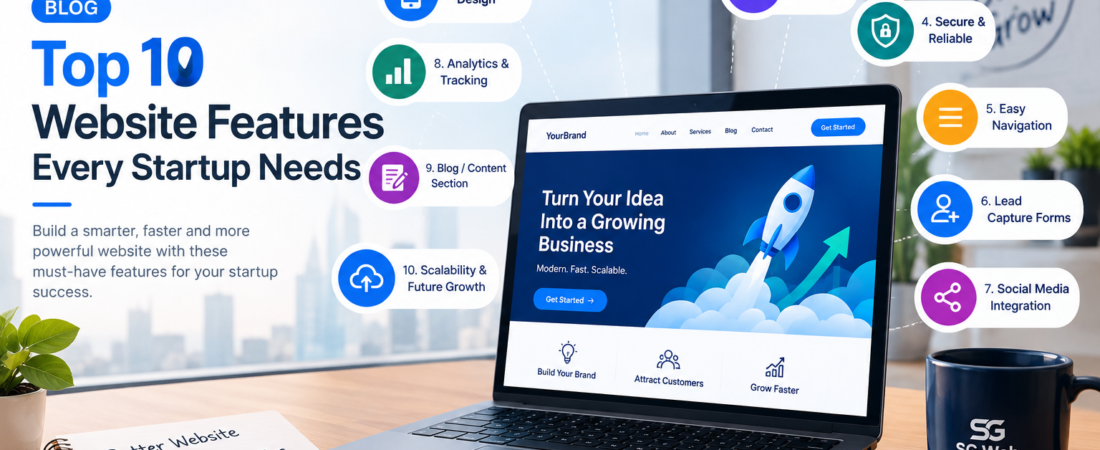
Starting a new business is exciting, but building a strong digital presence is equally important. Today, your website is often the first place potential customers, investors, and business partners go to learn about your startup. A professional website can help establish credibility, generate leads, showcase your products or services, and support long-term business growth.
However, simply having a website is not enough. Your startup website needs the right features to deliver a professional user experience, perform well on search engines, and convert visitors into customers.
In this blog, we will discuss the top 10 website features every startup needs to build a strong online presence and compete effectively in today’s digital marketplace.
Why Does a Startup Need a Professional Website?
A professional website acts as your startup’s digital identity. Unlike social media profiles, your website gives you greater control over your branding, content, customer experience, and lead-generation process.
A well-designed startup website can help you:
Build trust and credibility
Showcase your products or services
Generate qualified leads
Improve your online visibility
Provide information 24/7
Connect with customers through multiple channels
Support digital marketing campaigns
Establish a professional brand identity
Whether you are launching a technology startup, consulting company, eCommerce business, local service, or B2B company, the right website features can make a significant difference.
Top 10 Website Features Every Startup Needs
1. Mobile-Friendly and Responsive Design
One of the most important website features for startups is responsive web design.
People access websites using smartphones, tablets, laptops, and desktop computers. Your website should automatically adapt to different screen sizes and provide a smooth browsing experience across devices.
A mobile-friendly website should have:
Responsive layouts
Easy-to-read text
Mobile-friendly navigation
Properly sized buttons
Optimized images
Fast-loading pages
Easy-to-use contact forms
A poor mobile experience can cause visitors to leave your website quickly. Therefore, startups should prioritize responsive website development from the beginning.
2. Fast Website Loading Speed
Website speed is another essential feature for a successful startup website.
Visitors expect websites to load quickly. If your website takes too long to load, users may leave before viewing your products or services.
To improve website performance, startups should consider:
Compressing images
Using optimized website themes
Minimizing unnecessary plugins
Using reliable hosting
Implementing caching
Optimizing CSS and JavaScript
Using a Content Delivery Network when appropriate
A fast website can improve user experience and support better performance in search engines.
3. Clear Navigation and User-Friendly Structure
Your website should make it easy for visitors to find the information they need.
A complicated navigation system can frustrate users and make it difficult for them to understand your business.
A typical startup website may include:
Home
About Us
Services or Products
Portfolio or Case Studies
Blog
Contact Us
Use clear menus, descriptive page names, internal links, and logical page structures.
Your website visitors should be able to understand what your startup offers within a few seconds of landing on the website.
4. Strong Call-to-Action Buttons
A startup website should not simply provide information. It should encourage visitors to take action.
This is where Call-to-Action (CTA) buttons become important.
Examples include:
Get a Free Quote
Contact Us
Book a Consultation
Request a Demo
Start Your Project
Buy Now
Download Brochure
WhatsApp Us
Place relevant CTAs throughout important pages without making the website feel overly promotional.
For example, a software startup could use “Request a Demo,” while a digital marketing agency could use “Get a Free Consultation.”
A clear CTA helps guide visitors toward the next step.
5. SEO-Friendly Website Structure
Search engine optimization should be considered during website development, not added as an afterthought.
An SEO-friendly website gives search engines a clear understanding of your website’s content and structure.
Important SEO features include:
SEO-friendly URLs
Proper heading structure
Optimized title tags
Meta descriptions
Image alt text
Internal linking
XML sitemap
Schema markup where appropriate
Mobile-friendly design
Fast page speed
High-quality, relevant content
For WordPress websites, tools such as Rank Math SEO can help manage important on-page SEO elements.
Startups should also conduct keyword research before creating website content. Target keywords should be naturally incorporated into page titles, headings, content, URLs, and metadata.
6. Secure Website With SSL
Website security is essential for every startup.
An SSL certificate enables HTTPS and helps protect information transferred between the website and visitors.
You should always make sure your website uses:
HTTPS://
instead of:
HTTP://
A secure website also creates greater confidence among visitors, particularly when they are submitting contact details, creating accounts, or making online payments.
Startups should also maintain:
Updated WordPress core
Updated themes and plugins
Strong administrator passwords
Regular website backups
Security monitoring
Secure hosting
Website security should be treated as an ongoing process rather than a one-time setup.
7. Lead Generation and Contact Forms
For many startups, the primary purpose of a website is generating business leads.
A professional lead-generation website should make it easy for visitors to contact the business.
Useful lead-generation features include:
Contact forms
Quote request forms
Consultation booking
Newsletter subscriptions
WhatsApp integration
Click-to-call buttons
Demo request forms
Lead magnets
Chat functionality
Keep forms simple. Asking for too much information can discourage visitors from completing them.
For example, a basic service inquiry form could request:
Name + Phone/Email + Service Required + Message
You can collect additional information later during the sales process.
8. Social Media and WhatsApp Integration
Social media can be an important part of a startup’s digital marketing strategy.
Your website should make it easy for visitors to connect with your business on platforms such as Instagram, Facebook, LinkedIn, and YouTube.
You can also integrate WhatsApp into your website using a WhatsApp chat or inquiry button.
For example:
“Have Questions? Chat With Us on WhatsApp.”
Social media integration helps visitors move between your website and other digital channels while creating additional opportunities for engagement and lead generation.
However, social media links should support your website rather than replace it. Your website should remain the central digital destination for your business.
9. Blog and Content Marketing Section
A blog is one of the most valuable long-term features for a startup website.
Regularly publishing useful content can help your business demonstrate expertise, answer customer questions, and target relevant search keywords.
For example, a digital marketing company could publish articles about:
SEO strategies
Google Ads
Meta Ads
Social media marketing
Website development
Content marketing
Local SEO
Digital marketing trends
A well-planned blog can attract organic traffic from people searching for solutions related to your products or services.
Each article should focus on a specific search intent and provide genuinely useful information instead of simply repeating keywords.
10. Analytics and Conversion Tracking
One of the biggest advantages of a digital business website is the ability to measure performance.
Startups should implement analytics and conversion tracking to understand how visitors interact with their website.
You can monitor metrics such as:
Website visitors
Traffic sources
Popular pages
Engagement
Form submissions
Phone calls
Campaign performance
Conversion rates
Tools such as Google Analytics and Google Search Console can provide valuable information about website traffic and search performance.
Conversion tracking is particularly important when running advertising campaigns because it helps businesses understand whether their marketing efforts are generating meaningful actions.
Bonus: Professional Branding and Visual Design
In addition to the ten essential features above, startups should pay attention to branding.
Your website should have a consistent visual identity across:
Logo
Colors
Typography
Images
Icons
Buttons
Marketing materials
A professional and consistent design can help visitors recognize your brand and create a more cohesive customer experience.
Avoid overcrowding your website with unnecessary animations, pop-ups, graphics, and features. The goal should be to make the website professional, fast, easy to use, and focused on business objectives.
How These Website Features Help Startups Grow
The right website features work together rather than independently.
For example, responsive design improves the mobile experience, while fast loading improves usability. SEO helps people discover your website, while strong CTAs and lead-generation forms help convert visitors.
The overall process can look like this:
Search Engine → Website → Valuable Content → CTA → Lead → Customer
This is why startups should think about their website as a business growth platform rather than simply an online brochure.
Common Website Mistakes Startups Should Avoid
While adding useful features is important, startups should also avoid common website mistakes.
Avoid Poor Mobile Design
A website that works only on desktop computers can create a poor experience for mobile users.
Avoid Slow Pages
Large images, unnecessary plugins, and poorly optimized websites can negatively affect loading speed.
Avoid Unclear Messaging
Visitors should quickly understand what your business does and who it serves.
Avoid Too Many Pop-Ups
Excessive pop-ups can interrupt the user experience.
Avoid Ignoring SEO
Building a website without considering search engine optimization can make it harder for potential customers to discover your business organically.
Avoid Complicated Contact Forms
Make it easy for potential customers to contact you.
Final Thoughts
A successful startup website requires more than attractive visuals. It needs a combination of performance, usability, SEO, security, branding, and lead-generation features.
The top 10 website features every startup should consider are:
Mobile-friendly responsive design
Fast loading speed
Easy navigation
Strong call-to-action buttons
SEO-friendly structure
SSL and website security
Lead-generation forms
Social media and WhatsApp integration
Blog and content marketing
Analytics and conversion tracking
When these features are implemented properly, your website can become an important part of your startup’s marketing and business development strategy.
Whether you are launching a new startup or upgrading an existing website, investing in professional website development can help create a strong foundation for your digital presence.
Looking for Professional Website Development?
At SG Web Technologies, we provide professional website development and digital marketing solutions for startups, businesses, and enterprises.
Our services include:
Website Development
WordPress Website Development
SEO
Meta Ads
Google Ads
Social Media Management
Performance Marketing
Digital Marketing Solutions
Ready to build a professional website for your business? Contact SG Web Technologies today and take your digital presence to the next level.
Frequently Asked Questions
1. What are the most important website features for a startup?
The most important features include responsive design, fast loading speed, clear navigation, SEO-friendly structure, strong CTAs, contact forms, security, analytics, and social media integration.
2. Why is responsive website design important for startups?
Responsive design allows a website to work effectively across smartphones, tablets, laptops, and desktops, providing visitors with a consistent browsing experience.
3. Does a startup website need a blog?
A blog can support content marketing and SEO by allowing startups to publish useful information targeting relevant topics and search queries.
4. How can a startup website generate leads?
Startups can generate leads using contact forms, quote forms, consultation bookings, WhatsApp buttons, phone-call buttons, demo requests, and strategically placed CTAs.
5. Is SEO important for a startup website?
Yes. SEO can help improve a website’s visibility for relevant search queries and provide opportunities to attract organic visitors over time.
6. Should startups use WordPress?
WordPress can be a practical option for many startups because it supports a wide range of themes, plugins, content management features, and SEO tools. The appropriate platform depends on the startup’s specific requirements, budget, scalability needs, and technical requirements.